
PEACEPRINTS
75th Anniversary Honoree

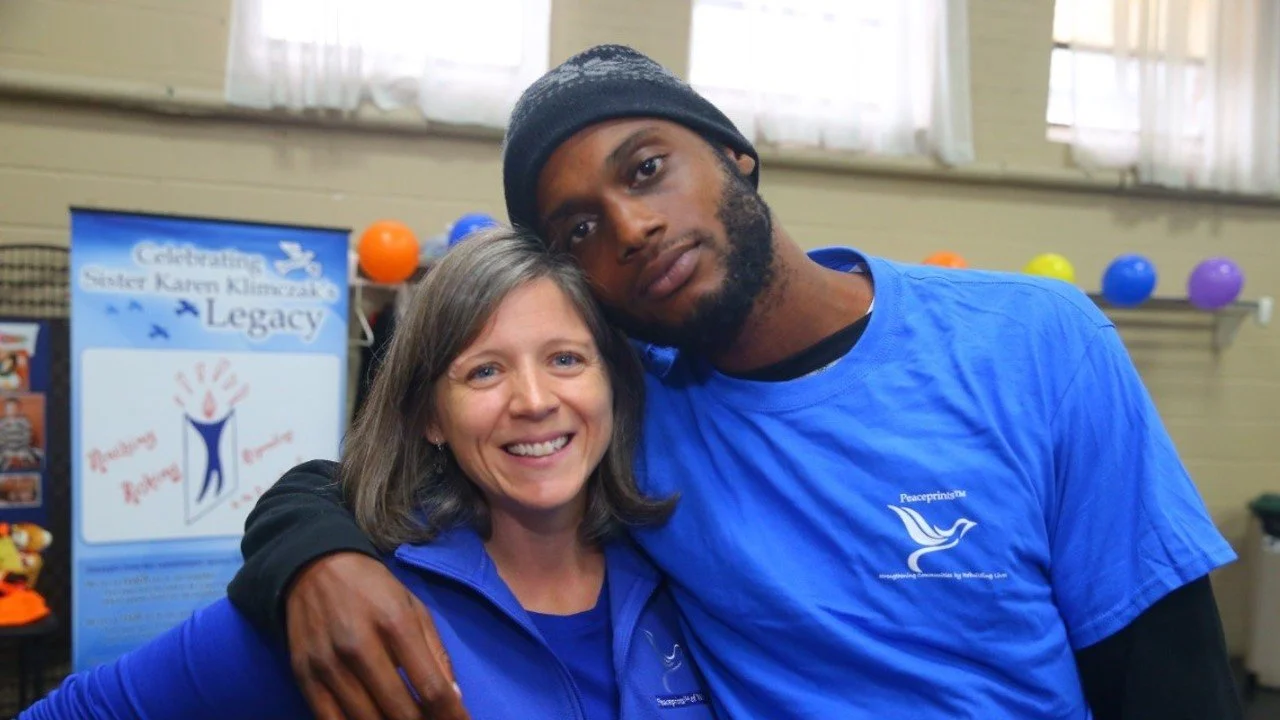
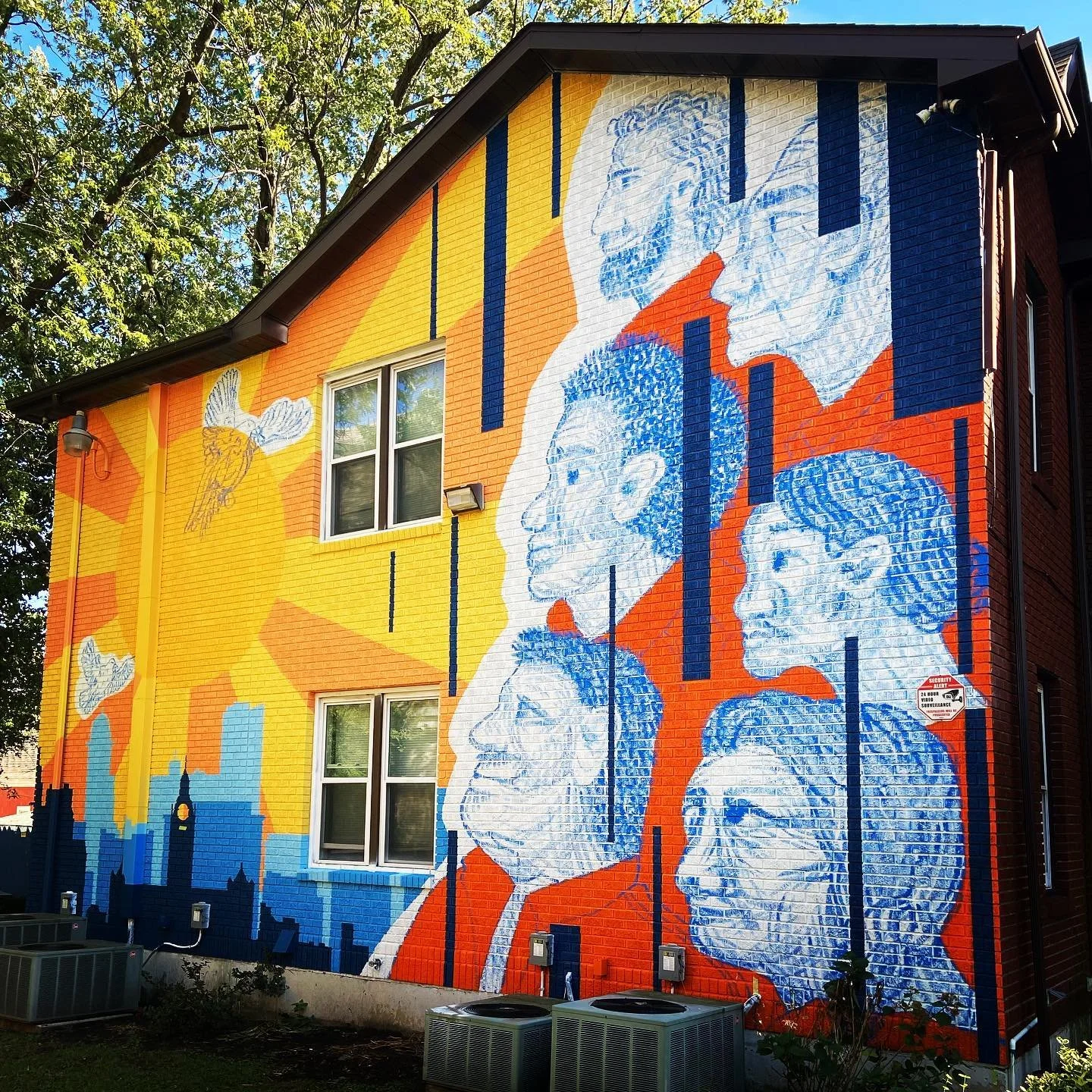
You may have seen a small white dove around Western New York on lawn signs or posters in windows. But do you know what that dove stands for? The symbol traces back to Sister Karen Klimczak, who founded Peaceprints of Western New York after seeing the challenges people faced returning home from incarceration. Thousands of the hand-cut doves were originally made by incarcerated individuals at Attica Correctional Facility and became a symbol of freedom, hope and the possibility of a new beginning that Sister Karen envisioned.
That spirit remains at the heart of Peaceprints today, nearly four decades later, as the organization works with individuals returning from incarceration to find stability, opportunity and a path forward. But getting the organization to where it is today has been its own journey. When Sister Karen died in 2006, Peaceprints had been largely sustained by volunteers and donations. Over the years that followed, the organization needed to develop the staffing, governance and infrastructure to carry on its mission. By 2014, it was operating with a budget of roughly $500,000, limited staff and an uncertain future. Around that time, its new leadership was introduced to the Western New York Foundation.
The Foundation’s first investment in Peaceprints was funding for window replacements at Bissonette House, a home that provides a place of stability, support and connection for the people the organization serves. On the surface, the project was about replacing aging windows and making a much-needed capital improvement. But the investment became an opening into something much bigger for both Peaceprints and the WNY Foundation. It was the start of a partnership built on trust and possibility that led to Peaceprints participating in the Foundation’s Impact Capacity Assessment Program (iCAP) - a turning point for the organization.
Through iCAP, Peaceprints was paired with a consultant who helped the organization address long-standing governance and organizational challenges. The work resulted in rewritten bylaws, redesigned board committees, strategic and annual planning, and a fundamental shift in how the board operated.
The process helped Peaceprints build the organizational foundation needed to move into its next chapter. It strengthened board leadership, clarified roles and responsibilities and created systems that allowed the organization to move beyond simply keeping the doors open and toward planning for the future.
Just as importantly, the Foundation continued to serve as a connector, introducing Peaceprints to people and ideas and staying engaged as the organization evolved. The relationship demonstrated how a funder can have an impact that reaches far beyond the size of a grant by combining financial support with accountability, connections and a genuine investment in organizational growth. And Peaceprints has been able to leverage the Foundation’s support to seek additional funding from other sources and continue to create sustainable impact.
Today, Peaceprints looks at that relationship as an important part of its evolution. The Foundation helped provide not only resources, but also the connections and capacity that allowed those resources to have a lasting effect.
MISSION
Strengthening communities by rebuilding lives